Home

Joe Cocchiarelli, PHD
Author / Writer
The layout of this site is made to be as simple and easy to use as posible.
Joe Cocchiarelli (born July 31, 1950) is an American author, academician, and columnist. His published works range from fiction, non-fiction, essays, and social-political commentary.
After his stint as an editorial assistant to Ralph Carlson, editor-in-chief at Garland Publishing, prepare the final edition of Hans Walter Gabler’s definitive edition of James Joyce’s Ulysses, his former colleague there, Marie Ellen Larcada, Academic Editor, proved resourceful. Within six years, Larcada published his first work, Screen Sleuths, 1992 A Filmography, with Essays on Crime Film from the Talkies until the early 21st century. While working as a teacher in the New York City Board of Education, he spent his summers completing his first novel, Ghost Song (2005), a historical narrative about the Beowulf poet and how he came to compose the Old English epic poem. That novel was finally rejected by Simon & Schuster in 2003 for not being “anti-Catholic enough.” After relocating to South Carolina in 2015, he contracted non-Hodgkin’s Lymphoma and underwent chemotherapy. While recuperating, Cocchiarelli developed his cancer journal, Still Life with Cats, 2021.
His first collection of short stories, “Talking Pictures: Stories Inspired by the Masterworks of Edward Hopper”, was published in 2024. This publication was promoted on the Mike Briggs’ podcast, Briggs on Books. The interview focused on how these short stories attempt to reinvent narrative style for short fiction. Cocchiarelli’s essays on cultural and political topics appear regularly in BruTimes.com, the online Indian journal of politics, culture and sports.
Early Life
Cocchiarelli was born in 1950 in Park Slope, Brooklyn, the son of Mary Iannace Cocchiarelli
and Joseph Paul Cocchiarelli, an importer of international foods and wines. The author’s
grandfather, Don Giovanni Cocchiarelli, was among the last of the industrialists to be knighted
by the House of Savoy before their unfortunate alliance with Mussolini led to that dynasty’s
permanent banishment from Italy. He is a graduate of Bishop Loughlin Memorial HS in Clinton
Hill, NY. He received a BA from Manhattan College, Riverdale, NY, 1972, an MA in English
Literature from Fordham University 1974, an MA in 18th Century Literature from Queen Mary
College, Univ. of London 1975, and his PhD in Medieval Studies from Fordham University,
Bronx, NY 1986. His early short fiction was mentored by Edmund White and Edward Albee.
When one of his stories caught the attention of Christopher Lehmann-Haupt’s mother, Letty
Grierson, she submitted “I See Her All the Time,” to the short fiction editor at The New Yorker.
Upon its rejection, the setback only inspired him to continue writing in a more suitable style as
originally recommended by Albee. The new version, New York Movie, reflects both Albee’s
criticism as well as Dawn Powell’s formula in The Golden Spur, where an aging author revives
her earlier stories by telling them from an opposite point of view. In his revisions for “TALKING
PICTURES”, Cocchiarell sought to personalize the narratives through the use of fictional
characters from Hopper paintings who somehow get mixed up with acquaintances and events in
real time.
Education
Cocchiarelli’s decision to complete his doctorate in Medieval Studies came about ironically after
his having turned down an earlier invitation by Sir Frank Kermode at Univ. College, London to
do an MA in Old English instead of 18th Century British Literature. Years later, after studying
Old French with Prof. Jeanette Beer, an Oxford luminary invited to develop the Medieval
Studies Program at Fordham, he transferred to her department and began studying Old English
Literature with Prof. James W. Earl instead..
For his doctoral thesis, Dr. Earl guided him toward his personalized approach to dissertation
writing: finding an important text which needed to be translated and writing a commentary.
Cocchiarelli chose to do a translation of the Old English Version of the Enlarged Rule of
Chrodegang, a late Carolingian text written for the reform of cathedral canons plagued by
sexual and financial scandal in the leading cathedral chapters of France. This academic history
along with his growing interest in genealogical studies led to the completion of his novel, Ghost
Song. Within six years of completing the doctorate he was determined to set the record straight
on how the Beowulf poet composed the Old English epic poem. Iconoclastically, Cocchiarelli
sets the novel in the penultimate stage of the collapse of Anglo-Saxon civilization. Most
scholars insisted on an earlier, pre-Christian, date. Toward the end of the novel’s completion in
the late ’90s, a professor of linguistics at the University of Essex proved that the poet’s diction
pointed to a late 10th century date after all, proving Cocchiarelli’s intuitive choice right after all.
Genealogical Research
The author’s academic and literary journey was further renewed by his discovery of his ancestry
from two of the most decidedly antithetical figures in medieval history. His maternal grandfather
was a direct descendant of the last Emir to rule Palermo before the Normans overthrew Muslim
rule ca. 1070 AD. Their family name, Saglimbene, or in its Arabic form,Ibn Salim سليم بن,
was the oldest African-Muslim name in Sicily. Within 100 years of Muslim rule, Southern Italy’s
greatest historian and a direct descendant of Emir Hasan al-Samsam, Fra Salimbene, became
chief historian for the Franciscans and chronicler for the current Holy Roman Emperor. Also
astoundingly, Cocchiarelli’s maternal grandmother is descended from the Sepphardic Jewish
family which organized the resistance to the British backed Unification of Italy. On his paternal
grandparent’s side, his father’s mother was descended from the Cioffis; their Viking presence in
Southern Italy, presumably after the Second or Third Crusade, established that family name
there. Along with their fellow Norman crusader-settlers, these Scandinavian transplants to
Southern Italy established a stronghold in Avellino to fortify a late Roman settlement, Cervinara
or “the place overrun by deer,” where both sides of Cocchiarelli’s paternal ancestors flourished
until they emigrated to New York. His particular clan name, Cioffi, is among the oldest Danish
names recorded in the Venerable Bede’s History of the English Church and People. His
maternal ancestors settled mainly in the New York area; however, his maternal grandmother’s
uncle fled to Louisiana after Southern Italy was overrun by the House of Savoy in 1860. His
great uncle, Garmine Saglimbene, died fighting for the Confederacy at VIcksburg.
Personal Life
It was only during an interview for the John Jay College newspaper, the Sentinel, that one of
his students, a Yemeni immigrant, Ahmed Souleyini, prompted him to recall the most
astounding change he had experienced after retiring from high school teaching to join the
English Dept. at John Jay CUNY. To Coccharelli’s amazement, it took Ahmed two semesters
of Medieval-Early Renaissance Lit. to master Shakespeare’s Much Ado about Nothing.
His pointed question–“Why didn’t you go on to teach college English after receiving your
doctorate?–helped Cocchiarelli recollect that he was first inspired by rejection letters from
mostly mediocre institutions, before he decided to make the instruction of adolescents his life’s
work. At the time of his joining the faculty at John Jay CUNY, Brooklyn Technical HS, formerly
one of the most outstanding schools in the city system, had declined both in faculty and the
quality of its student body. Cocchiarelli ribbed the young Yemeni reporter, “I went from teaching
some of the brightest “sociopaths”, to perhaps less gifted but much more appreciative students
right here in the shadow of the Metropolitan Opera. Cocchiarelli had no regrets about the
course his life took and his amazing former students, many future scholars at the Univ. of
Chicago, Johns Hopkins, and MIT to mention a few, whom he had the honor of having taught. It
more than made up for his greatest failure, the disgraced governor of New York, Andrew
Cuomo, whom Cocchiarelli taught as a freshman at Fordham College. After retiring from CUNY
in 2010, he relocated to South Carolina and lives in a lakeside home with his son and
chief-editor, Hosea, and their menagerie, a Blue TIpped Beagle hound and four cats.
Relations
Hosea Inman Cocchiarelli, Son
Maria C. Berger, Sister: Curator-Director, The Museum of Friends, Gardner CO
Salvatore Cioffi, Great Uncle: aka The Venerable Lokanatha
Published Works: SCREEN SLEUTHS, Garland/Taylor Francis, NY & London, 1992
(revised paperback 2019) GHOST SONG, 2019
 STILL LIFE with CATS, 2021
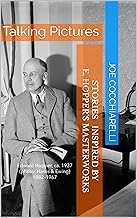 TALKING PICTURES, 2024.
Works in Progress
The Collected Essays of Joe Cocchiarelli July 2025
THE NIGHT WATCH or ERASING REMBRANDT October 2025
Articles:
“A Mission to India: The author recalls his great uncle, the Italian-Buddhist Saint, The Venerable
Lokanatha”
“How Trump REALLY Won the Election and Why It’s Important for India”
“Shakespeare Wallah: A new approach to Shakespeare, in honor of Madhur Jaffrey”
“The 8th Anniversary of the Slaughter in Mumbai and the Lubavitch Martyrs of India”
Guest Appearance
Briggs on Books, Jan. 14, 2025
Web Channel: CentralValleyTalk.com
Dissertation: https://research.library.fordham.edu › AAI8615710
by JJ COCCHIARELLI · 1986 · translation of and commentary on The Old English Version of the
Enlarged Rule of Chrodegang, a rule for canons in the cathedrals prior to the Gregorian Reform.

 Home
Home 